

316 UCB, 80309-0316
ATLAS Center 329 303-492-7574 303-492-1362

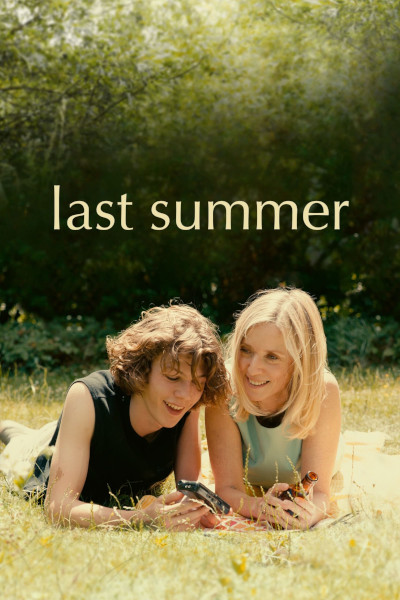
When Anne, the elegant, enigmatic protagonist in Catherine Breillat’s “Last Summer,” walks in a room, she holds your gaze as formidably as she holds those of everyone in this startling, perverse French movie. A lawyer, wife, mother and sister, Anne likes sheath dresses and high heels, tasteful antiques and a sense of order. She’s serenely self-possessed, and everything in her life is just so, which suggests that she’s either invincible or waiting to break. Both are in play when she abandons herself in a shocking, recklessly consuming affair.
Few directors get as deeply under the skin as Breillat, a longtime, reliably interesting provocateur who tests the limits of what the world thinks women should do and say and be. Breillat is interested in complexity, not orthodoxy (feminist or otherwise), in autonomy and subjugation, and in all the ways that pleasure and desire can take violent hold of minds and bodies. She was in her 20s when she directed her first feature, “A Real Young Girl” (1976), about a teenager’s sexual coming-of-age. It’s a messy, jolting movie; there aren’t many filmmakers who shock you like Breillat does and with such supremely natural ease.
Anne, played by a superb Léa Drucker, seems wholly satisfied in her world. She and her loving, attentive husband, Pierre (Olivier Rabourdin), have two sweet girls, and live in a large, handsome suburban home. She’s close to her sister, Mina (Clotilde Courau), and Anne’s work seems satisfying and perhaps even important: She advocates for victims of sexual abuse and in cases involving parental custodianship. Outwardly, her life looks ideal, if maybe overly comfortable, and its frictionless surfaces — especially in a French movie about upper-class people — seem primed for disruption. Even so, nothing about her suggests that she will soon lose herself in an affair with her 17-year-old stepson, Théo (Samuel Kircher).
It gets messy fast. Anne and Théo aren’t close (you sense that they never have been), and there’s a grudging resentment bordering on hostility in how they engage with each other at first. Breillat reveals the complexity of their relationship with scalpel-like precision. The early tension between Anne and Théo is palpable, and partly a consequence of their claims on Pierre. Breillat isn’t a flashy visual stylist, but she makes every image count in “Last Summer.” There’s meaning in each smile and bit of skin, as when Breillat folds in shots of Théo and Pierre with bared torsos, the beauty of youth answered by the poignancy of age.
“Last Summer” is complex, tricky, at times very uncomfortable and thoroughly engrossing. Part of what makes the movie enthralling, at least in its first squirmy half, is the spectacle of watching a character rush into a morally abject, altogether questionable and seemingly obvious disaster; it’s like watching a slow-moving car crash. I don’t think that is necessarily how Breillat sees it, mind you. That only makes the movie more interesting even if it doesn’t prepare you for what comes next in a story about a woman who — after entrancing and appalling you — emerges as both more monstrous and more human than you’re prepared for.
— Manohla Dargis, The New York TimesFree show!
Tue September 9, 2025, 7:30 PM, Muenzinger Auditorium
France, 2023, in French, 104 min
Director: Catherine Breillat, Writer: Catherine Breillat, Original Film Writer: May el-Toukhy, Maren Louise Käehne, Co-Writer: Pascal Bonitzer, Cast: Léa Drucker, Samuel Kircher, Olivier Rabourdin, Clotilde Courau, Serena Hu
