

316 UCB, 80309-0316
ATLAS Center 329 303-492-7574 303-492-1362

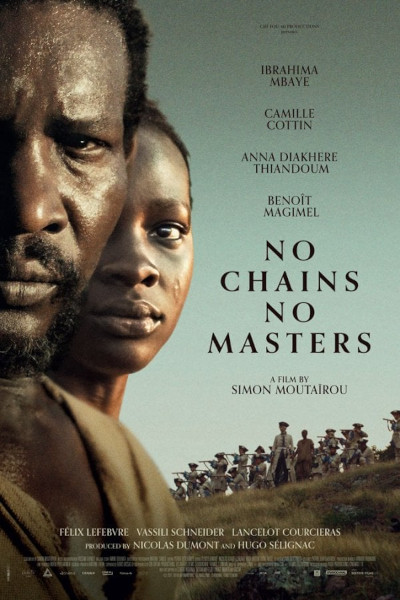
Simon Moutaïrou, the critically acclaimed screenwriter behind the spy thriller hit “Black Box,” has partnered with some of France’s biggest players — leading producer Chi-Fou-Mi (“November,” “All Your Faces”) and Studiocanal — on his ambitious directorial debut, “No Chains, No Masters.”
It marks the first big-scale narrative French movie in recent history which sheds light on slavery in French colonies. It’s produced by former Studiocanal senior executive Nicolas Dumont and Hugo Selignac at Chi-Fou-Mi, a Mediawan banner which is nominated for nine Cesar Awards.
Speaking to Variety on the eve of the EFM, Moutaïrou told Variety that “No Chains, No Masters” was a personal project dating back to his childhood in Benin, another former French colony in West Africa which used to be called the Kingdom of Dahomey.
“When I was a child, I remember playing on the beach with my brother and seeing this big door, like a red monolith called the ‘Gate of No Return,’ facing the ocean,” Moutaïrou says. “I knew it was memorial to the enslaved Africans who were deported, so I kept imagining how so many men, women, children and entire families had been deported and swallowed by the sea.”
“It was important for me to be as close to the truth as possible because cinema’s role is to fill the gaps of historical representations,” says Moutaïrou, who admits that he wishes he had learned more about slavery when he was younger. “I didn’t have any icons, my imagination lacked representation and that’s why movies are meant to represent myths and legends.” Moutaïrou says a few movies about slavery by Guy des Deslauriers, Med Hondo and Euzhan Palcy were made in the 1970s and 1980s in France, but nothing much since then.
Dumont shares Moutaïrou’s perspective on the dearth of representation of France’s colonial past in popular culture. “American filmmakers have tackled slavery for the last 20 to 30 years, but France hasn’t truly addressed this chapter of colonialism … I think it’s a symptom of a larger issue,” he says.
“We hope that with this film we will be able to awaken consciousness and tell younger generations about this painful period of French history,” Dumont says. Slavery was abolished in France in 1794 amid the Revolution.
Moutaïrou points out there are many difference between the slavery practices in the Americas and West Africa. “In French settlements, the foremen were Black, there weren’t white men as in cotton plantations in the United States. It’s true that we talk about ‘Twelve Years a Slave’ and ‘Django,’ but our films tells a different world, one that is authentically French,” says the filmmaker, adding that he hopes “No Chains, No Masters” will form a bridge with the French films that were made in the ’70s and ’80s. — Elsa Keslassy, VarietyFree show!
Sponsored by Center for African and African American Studies (CAAAS)
Thu September 11, 2025, 7:30 PM, Muenzinger Auditorium
France; 2024; in French, Wolof; 97 min
Writer: Hassam Ghancy, Simon Moutaïrou, Director: Simon Moutaïrou, Cast: Ibrahima Mbaye, Anna Thiandoum, Camille Cottin, Benoît Magimel, Bass Dhem
