

316 UCB, 80309-0316
ATLAS Center 329 303-492-7574 303-492-1362

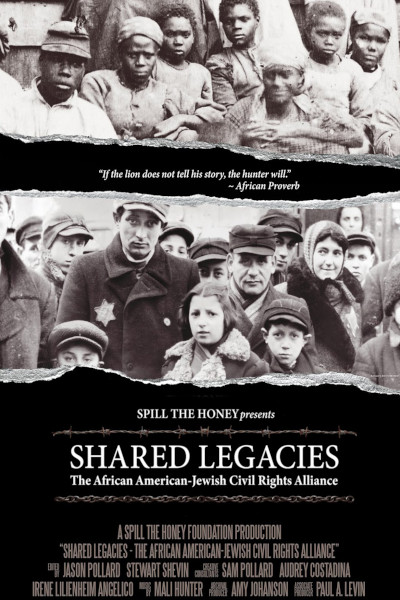
“Shared Legacies,” a documentary detailing the historical bond between Jews and Black people, especially during the civil rights movement, couldn’t be more on target for director-producer Shari Rogers and executive producer Lisa Weitzman, who are lifelong social activists. Weitzman’s mother is a Holocaust survivor who was saved by Catholics. On a deeply personal level, Weitzman appreciates what it means to step up to the plate.
Rogers, a clinical psychologist, previously co-produced “Eli: Inspiring Future Generations,” a PBS documentary examining the life of Holocaust survivor Eliezer Ayalon, a Yad Vashem tour guide. She also is the president and founder of Spill the Honey, a Michigan-based nonprofit committed to promoting human dignity as well as advancing public knowledge of the Holocaust and the civil rights movement.
Weitzman is a real-estate/corporate executive who has served as a board member of several nonprofit organizations including the Simon Wiesenthal Center in New York. In 2015, she joined the executive committee of Building Relationships at Spill the Honey. Both women are committed to the notion that the time is ripe to celebrate how connected Blacks and Jews once were and should be again. A renewed alliance is especially relevant at this moment of racial reckoning and the rise of anti-Semitism, Rogers asserted during a three-way phone interview (with Weitzman). What’s particularly disturbing to her is that many people are unfamiliar with the historical interconnection of Jews and Blacks.
As an example, director Ava DuVernay’s film “Selma,” commemorating the 50th anniversary of the Selma march (leading to the Voting Rights Act), made no mention of Jewish participation in the march or indeed the civil rights movement. “But it’s not our goal to serve as a corrective to any one film, or individual, or group,” Rogers said. Rather, she explained, the goal of the film is reconciliation.
Rogers said that one of the more striking anecdotes she came across in her research was the recollection offered by Rabbi Saul Berman, a professor of Jewish studies at Yeshiva University. “He said that when he was released from a Selma jail on Shabbos — he had been arrested for participating in a march the previous day — he was unable to take a car ride to the next demonstration,” she said. “But he was determined to go despite the long walk. Many fellow protesters, Black and white, accompanied him on foot so that he wouldn’t have to make the trek alone.”
The most moving testimony in the film centers on a Holocaust survivor recounting the Black troops liberating the concentration camp where he was housed. It’s a familiar narrative, but it packs a punch each time.
The film touches on many complexities and contradictions, including the Orthodox rabbis and the Southern Jewish businessman who participated in the civil rights marches at great personal risk, Weitzman said.
Yet half a century down the road, some scenes in the film exist in a time warp. Consider: Danny Kaye and Harry Belafonte jointly singing “Hava Nagilah.” At its close, the film acknowledges that the Black-Jewish bond came to an end with the deaths of Martin Luther King Jr. in 1968 and Heschel in 1972. There’s no commentary on Israel or Black anti-Semitism as causes for the rift, though one of the talking heads obliquely refers to affirmative action (“meritocracy” issues) as a contributing factor.
Rogers and Weitzman said the conversation itself, with players on all sides of these emotionally and politically fraught issues, and, indeed, the making of the documentary, has been an unexpected step toward healing. And this is just the beginning. The film is slated to be shown at many community events and schools. Its educational value cannot be overestimated, according to Rogers, who is developing an accompanying curriculum.
But for Rogers and Weitzman, the most emblematic event of recent months was the heartfelt atonement expressed by Black entertainer Nick Cannon for his anti-Semitic remarks. For them, redemption and bridge-building is no far-flung fantasy. It’s a reality, right here, right now.
— Simi Horwitz, Jewish JournalSponsored by Center for African and African American Studies (CAAAS) and Department of History
Wed March 19, 2025, 7:30 PM, Muenzinger Auditorium
United States of America, 2020, in English, 95 min
Writer: Shari Rogers, Director: Shari Rogers
