

316 UCB, 80309-0316
ATLAS Center 329 303-492-7574 303-492-1362

Terence Davies specializes in outsiders; his characters are often solitary, melancholy figures contemplat ing a world of both immense sadness and intense pleasure. It’s a perspective this autobiographical filmmaker clearly shares, and one that extends to his place in British cinema. Thanks to a low profile that’s at once scrupulously self-maintained and a product of his industry’s never having known quite what to do with him, Davies has not achieved the household-name status he so richly deserves, despite widespread admiration from peers and critics (he’s “regarded by many as Britain’s greatest living film director,” wrote Nick Roddick in the London Evening Standar d in 2008). Still, this modest Liverpudlian has, with only six features and three shorts over a thirty-seven-year career, staked out a unique spot in his national cinema, creating films that defy easy categorization. Do his wrenchingly personal works fit within the long tradition of British realism or stand in contrast to it? Are they of a radical or conservative temperament? Do they convey despair or elation? The answer—all of the above—speaks to the films’ rich, strange, and emotionally complex beauty.
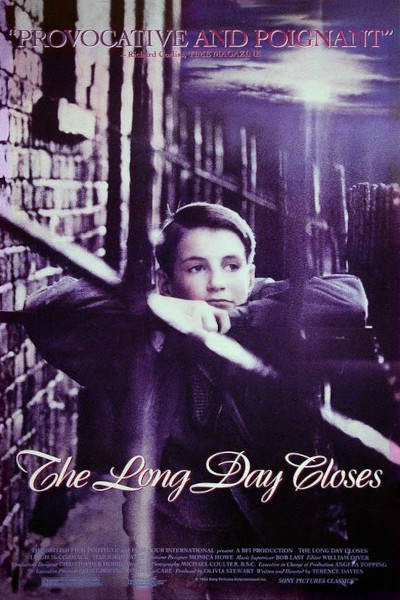
Concentrated as it is on a fleeting era in his life—the years that Davies has called his happiest, after the death of his father and before the acute terrors of puberty set in— The Long Day Closes is all about the moment as it’s experienced. It offers a cinematic lushness—of cinematography, set and sound design, music—that constitutes a sort of constant ecstasy. Davies’s personal obsessions, forged during childhood, are on majestic display here: the songs of Doris Day and Nat King Cole, the escape of the movies, the enveloping comfort of friendly neighbors, the camaraderie of holiday celebrations. “Everything seemed fixed, and it was such a feeling of security that this is how it will be forever, and I really believed that,” Davies said of this period. Yet there’s an underlying sadness encroaching on those joys, an awareness that it all must end. In The Long Day Closes, we’re essentially seeing the world through the eyes of a child alive to its sensations, yet whose astonishment is bridled by the wisdom of a middle-aged man aware of its disappointments. The effect is an almost unbearable poignancy.
— Michael Koresky, CriterionWed January 31, 2024, 7:30 PM, Muenzinger Auditorium
United Kingdom, 1992, in English, 85 min
Director: Terence Davies, Writer: Terence Davies, Cast: Leigh McCormack, Marjorie Yates, Anthony Watson, Nicholas Lamont, Ayse Owens
